Schunk Xycarb Technologies develops and manufactures graphite, ceramic, quartz, and silicone solutions for microelectronic applications. It operates globally from six locations: the Netherlands, the United States, China, South Korea, Taiwan, and Singapore. Bjorn Menke works as a Senior Process Engineer at the Dutch facility. His task is to optimize the production process wherever possible, and dust is a key element in that. Bjorn: "Every tiny bit of graphite machining creates dust. You don't want that dust in your machine or on your product; you want to extract it as quickly as possible to the outside, where it can be collected in big bags and taken away by the waste disposal service."
From manual to automated extraction
"We concluded that with the current machine, the operator had to perform many manual tasks to remove dust from both the processor and the products so that the product could be processed further," says Bjorn. "Dust extraction was a logical step. We considered bringing in a party from Finland, but we also had good experiences with the Dutch company Kiekens. We ultimately chose Kiekens, primarily because of the quality of their extraction systems. Furthermore, we appreciated working with a Dutch company that offered a level of service that met our expectations."
Specifications and an additional proposal
"We needed an extraction system that could be controlled by a robot. That way, the operator wouldn't have to keep operating the on/off switch. We also wanted dust extraction with more suction power. We had always used low-vacuum extraction, but that left quite a bit of dust in the machine. Our goal was to switch to high-vacuum extraction."
"Kiekens also came up with a proposal of their own: a modular system that is easy to expand. That was a great idea, because our organization is growing rapidly, so that requirement would inevitably come up at some point."
Thorough preparation
Once the order was placed, a thorough process began. Kiekens came on-site to see exactly what the robot line looked like, and their engineers consulted with our automation specialist to determine which system would be the best fit. They also organized an on-site simulation to check whether the suction power of the new system would be sufficient. This was mainly because our cable tray—through which the extraction hose had to pass—was on the small side. As a result, Kiekens was forced to connect a narrower hose. They pointed out the consequences to us: with a thinner hose, we would lose a significant amount of suction capacity. They took quite a risk with that, as we could have called off the order based on it. But it actually gave us confidence. Thanks to the simulation, we were able to make an informed choice and decided to proceed anyway."
Shaped by our
unique approach
DM9000: customized and scalable
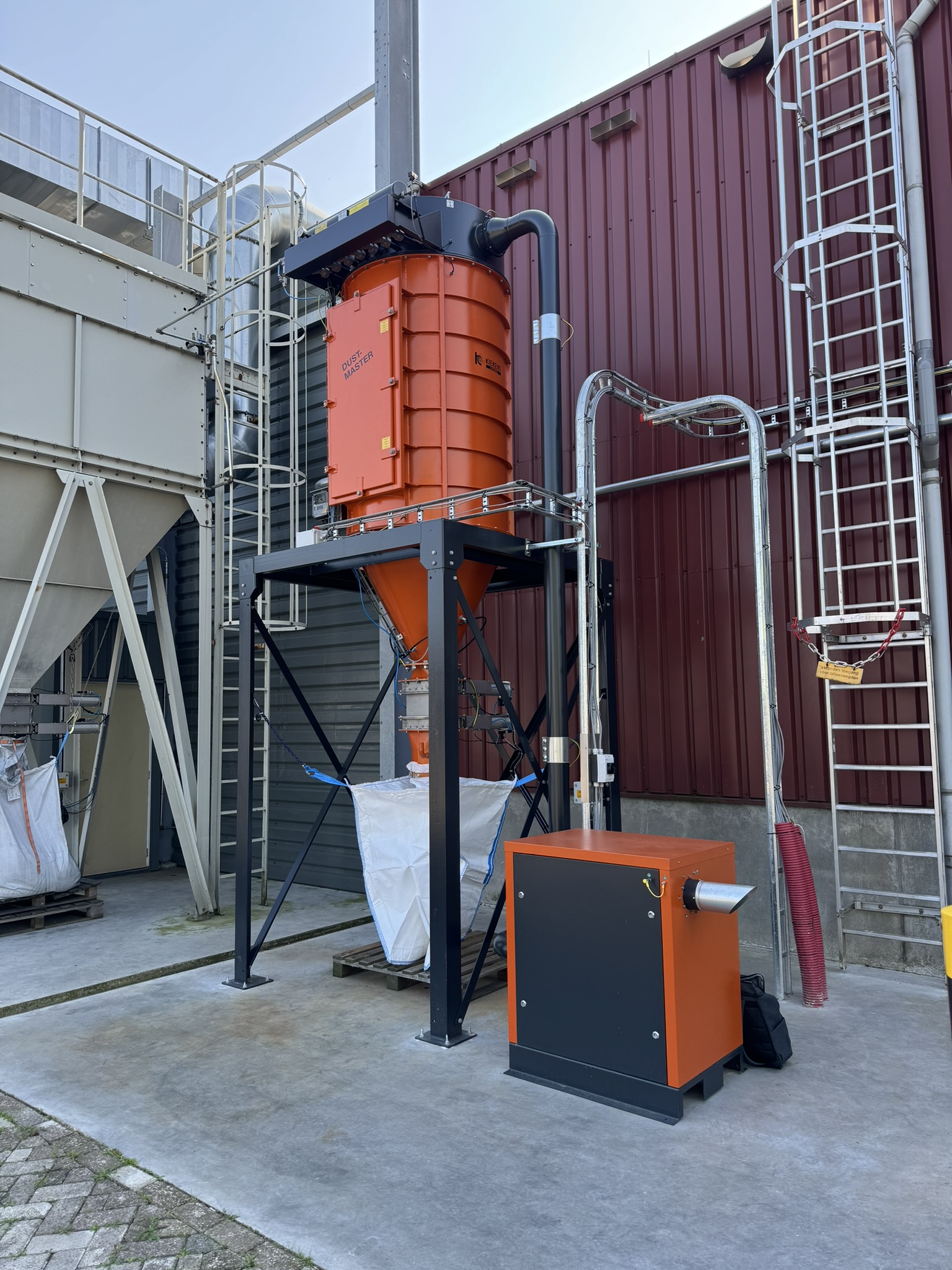
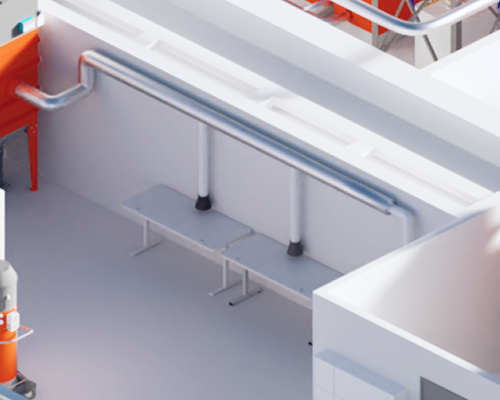
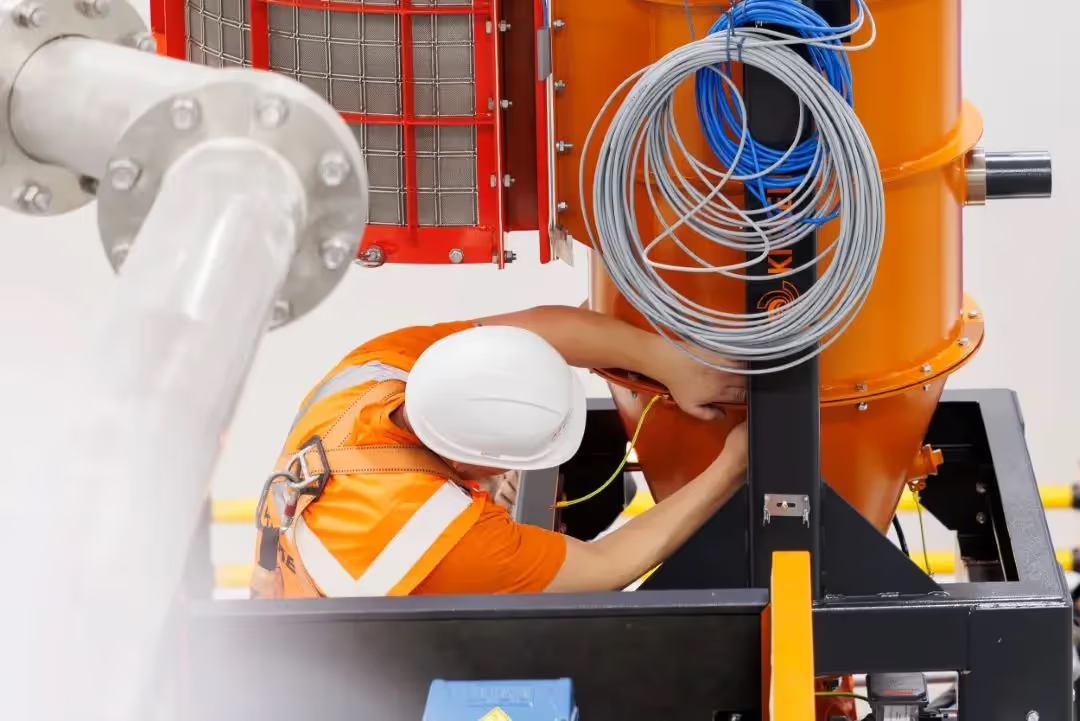
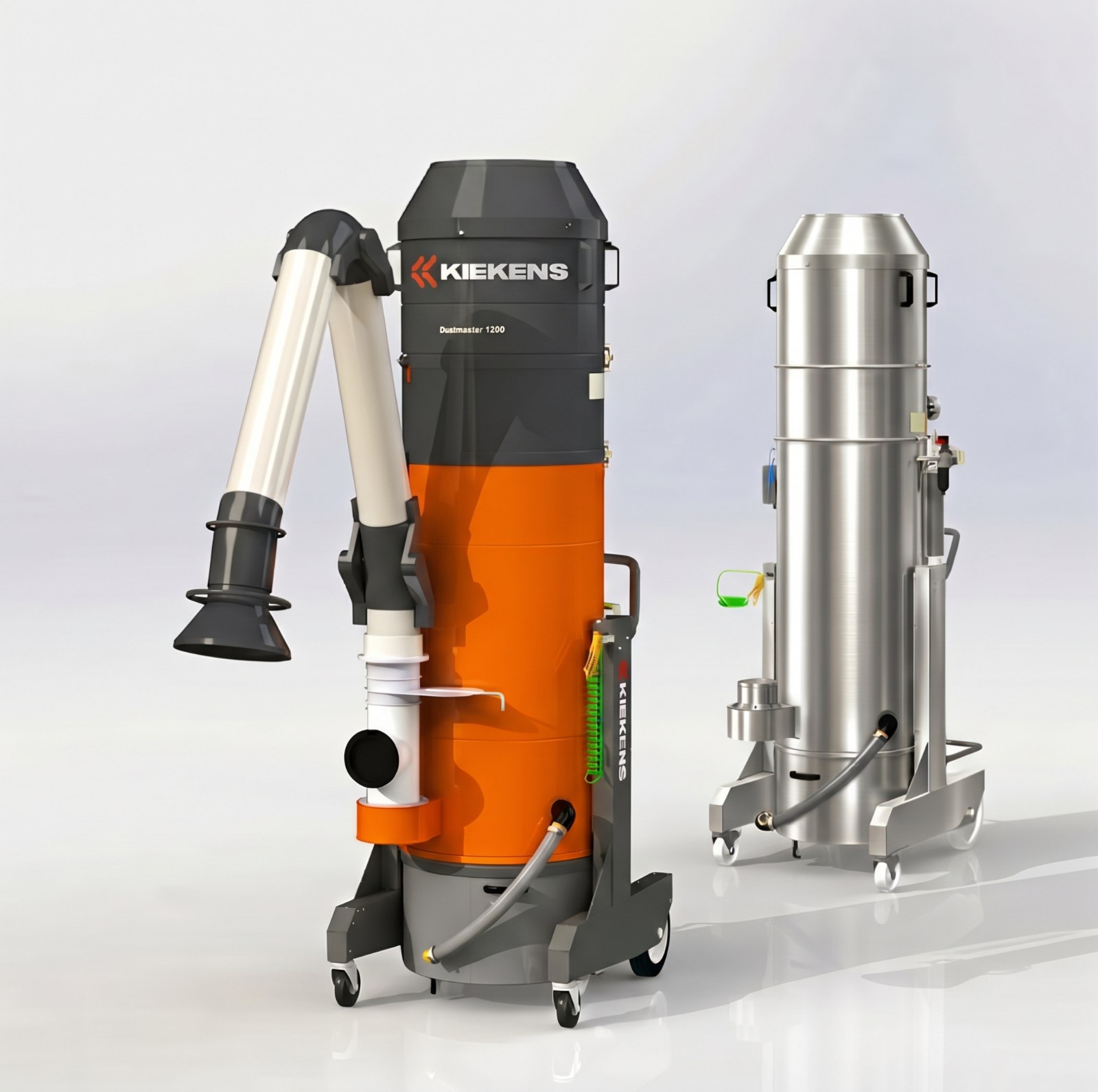
A Dustmaster DM9000 now stands proudly on the factory floor: a central high-vacuum extraction system with one turbo unit. Should the need arise, SchunkXycarb can easily connect multiple turbo units to it in the future. Incidentally, the extraction system was deliberately not fully automated. When an operator wants to clean the machine manually—since the robot cannot reach every spot—they simply pull down a hose reel.
Benefits
Bjorn is very pleased with the dust extraction system: "At Schunk, we optimize our processes based on three pillars: quality, speed, and operator dependency. What we are seeing now is that we have made gains on all fronts with this Kiekens dust extraction system:
1. If a product is dirty, the vacuum suction in the machine fails, and the product does not stay in place for processing. That is now a thing of the past.
2. Products are now guaranteed to be clean every time, because while an operator might forget something, a robot is consistent.
3. A product is always placed into the next processing machine in the same condition.
4. There is noticeably less dust in the machines and on the products. Dust that used to swirl around was extracted, but once it settled, it stayed there. That is truly different with this high-vacuum extraction system, even when the dust is in deep grooves. The system sucks everything up.
5. Manually cleaning products between processing steps meant the machine was often at a standstill. With this automated extraction system, that is hardly an issue anymore.
6. The operator only needs to operate the extraction system manually on rare occasions.
7. Everyone agrees that all those cleaning tasks, such as blowing away dust with a compressed air gun, are not the most enjoyable work, so this method of extraction is also appreciated on the shop floor."
Good coordination, good results
"Finally, if I look purely at the collaboration with Kiekens, I can only conclude that it has been excellent. A lot of coordination meetings were necessary, for example regarding the electrical diagrams and between Kiekens and the German company Fastems Systems GmbH. But everything went extremely smoothly," Bjorn notes with satisfaction.


Central dust extraction for every industry
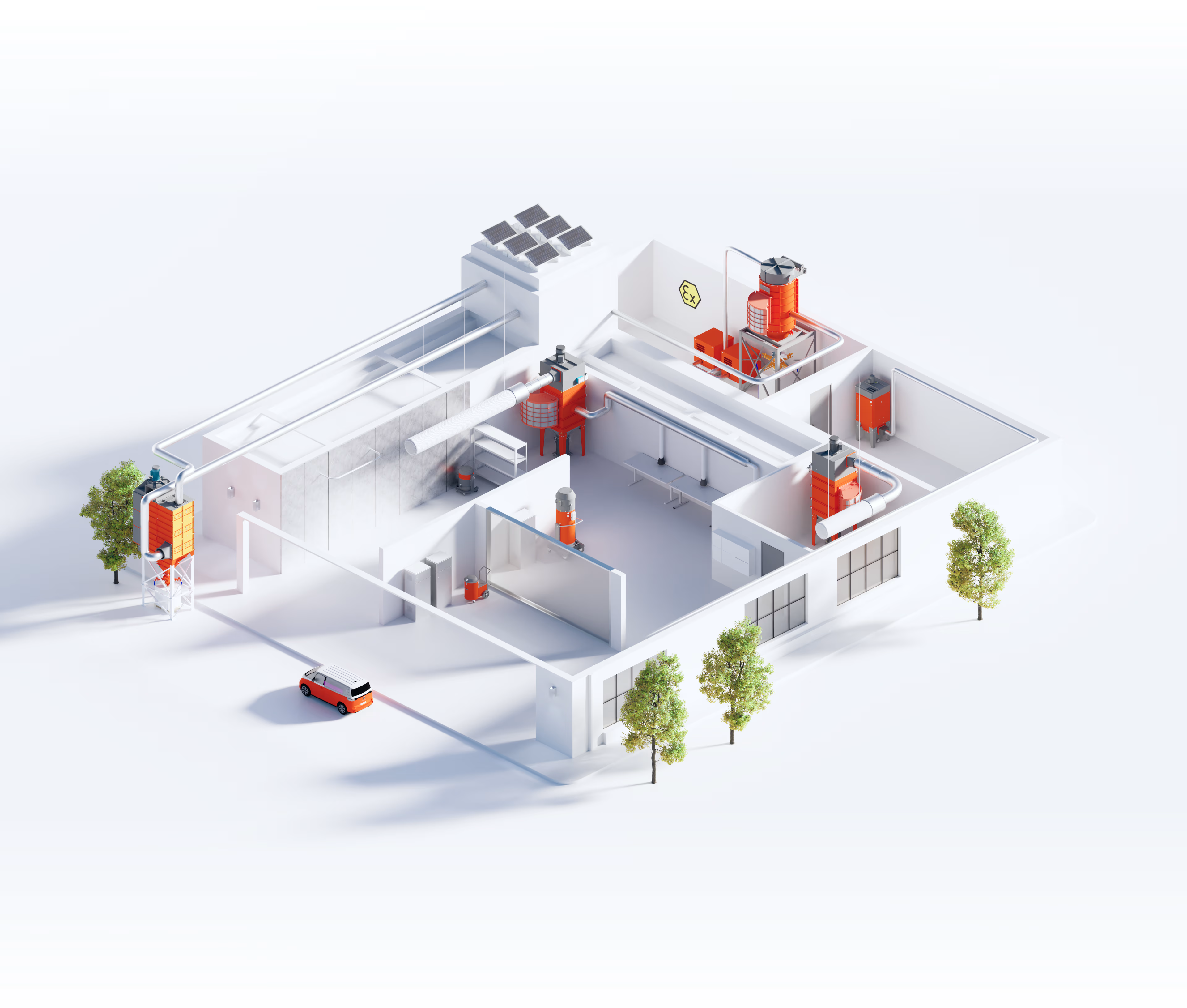
Kiekens provides central dust extraction as a total system. From source extraction and ducting to filtration and ventilation: we design, install and maintain a fully integrated solution. This is how we create a clean, safe working environment that grows with your production.




.avif)