Welding workplace regulations: safe setup and occupational health

What is a welding workplace?
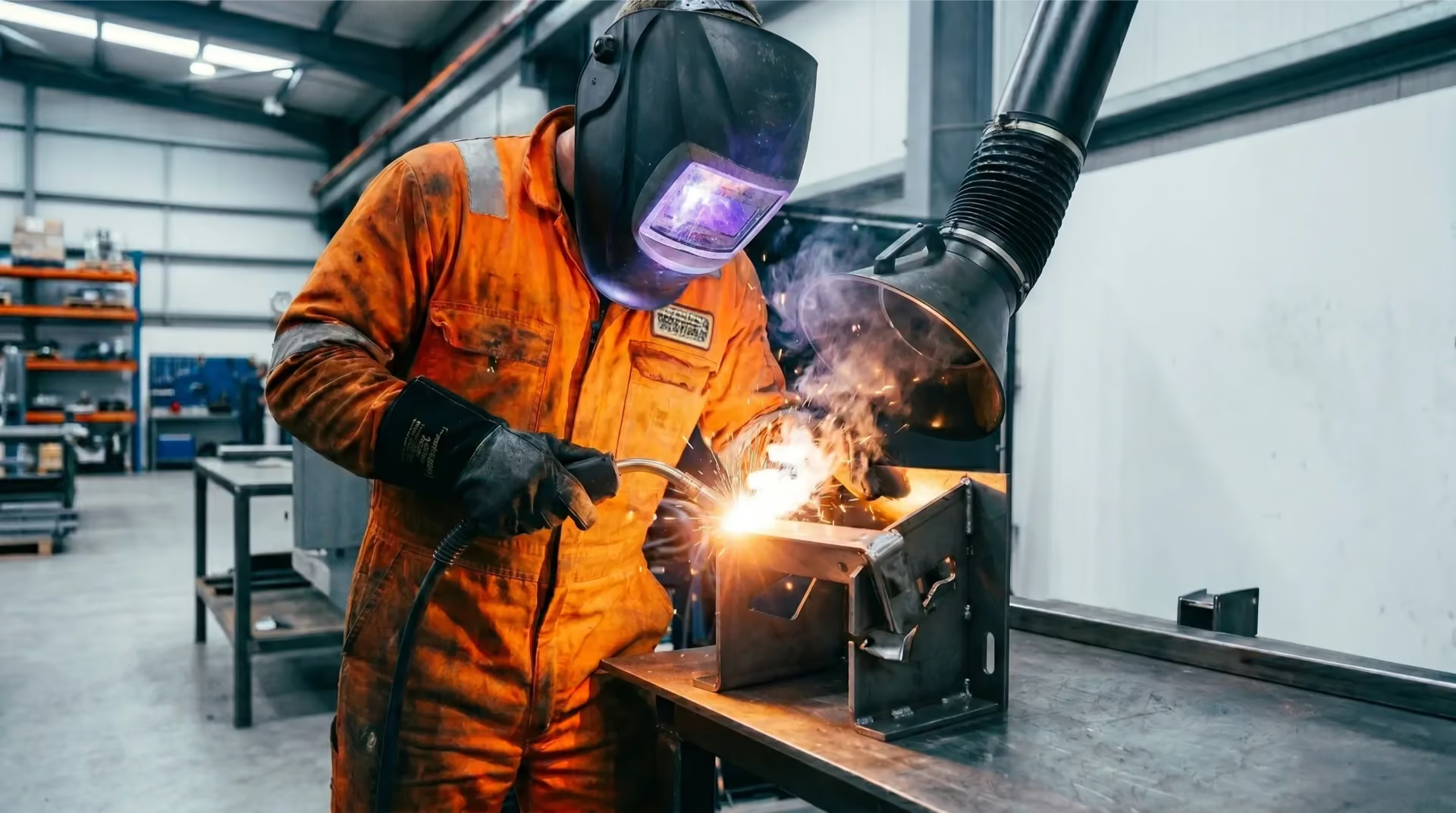
A welding workplace is a designated work area set up specifically for carrying out welding operations. Its design and equipment must ensure the safety of welders and everyone in the surrounding area.
Welding workplaces are found in workshops, production facilities and on construction sites. Depending on the welding process – from shielded metal arc welding to MIG/MAG welding and other methods – requirements for layout and protective measures differ. Planning takes into account not only the type of welding work, but also workpiece dimensions, ventilation and the extraction of welding fume.
What regulations apply to welding workplaces?
In Europe, welding workplace regulations are defined by a comprehensive framework of directives and standards. The key legal foundations:
The OSH Framework Directive requires employers to carry out a risk assessment for every welding workplace. The Chemical Agents Directive governs the safe handling of hazardous substances such as welding fume and gases released during welding.
Key regulatory principles for welding operations
Across Europe, the hierarchy of control measures for welding fume follows the same core principle: elimination and substitution take precedence over capture at source, which takes precedence over dilution ventilation. Technical measures have priority over organisational measures and personal protective equipment.
Employers are required to:
- Conduct a risk assessment before welding operations commence
- Comply with occupational exposure limits for welding fume and hazardous substances
- Provide suitable extraction at the point of generation
- Supply workers with appropriate personal protective equipment
- Provide regular training and instruction on hazards and protective measures
Capture of welding fume directly at the source is the most effective technical measure – the only reliable way to reduce the burden on breathing air in the working zone.
Hazards in welding
Welding generates a range of hazards that can seriously harm workers' health if adequate protective measures are not in place. The key risks:
- Welding fume and hazardous substances: welding produces fine particles of metal oxides that penetrate deep into the lungs. Depending on the process and base material, carcinogenic substances such as chromium(VI) and nickel can be released. Welding fume is one of the most common causes of respiratory disease among welders. The IARC classified welding fume as carcinogenic to humans (Group 1) in 2017.
- Radiation: arc welding and other processes generate intense UV radiation that damages the eyes and skin. Without a proper welding helmet, flash burns to the eyes and skin burns are serious risks.
- Heat and spatter: arc temperatures of several thousand degrees and flying sparks increase the risk of burns and fire. Protective clothing must be heat-resistant and cover the entire body.
- Electrical hazards: welding processes operate with high current. Contact with live workpieces can cause severe electric shocks.
- Noise and gases: certain welding processes produce high noise levels. Welding also generates harmful gases such as ozone and nitrogen oxides. The quantities released depend on the process and materials used.
Protective measures at the welding workplace
Setting up a safe welding workplace requires technical, organisational and personal protective measures, applied according to the hierarchy of controls.
- Welding fume extraction and ventilation: the most effective measure against welding fume is capture directly at the point of generation. Modern extraction systems with capture elements at the torch or as point extraction remove hazardous substances from the breathing air before they reach the welders' zone. Where extracted air is recirculated into the hall, systems must meet strict filtration performance requirements.
- Personal protective equipment: provision of suitable PPE is mandatory at every welding workplace. This includes a welding helmet with appropriate lens shade, flame-retardant workwear, heat-resistant gloves and safety footwear. Depending on the exposure levels, respiratory protection may also be required.
- Organisational measures: employers must provide regular training, document working conditions and monitor compliance with applicable regulations. Sector guidance and technical standards provide recommendations for state-of-the-art welding workplace design.
- Fire safety: a fire extinguisher must be immediately accessible at every welding workplace. For welding carried out outside fixed installations, a fire watch is required.
Clean air at the welding workplace: how Kiekens supports your operation
Every day, we take around twenty thousand breaths. That air ought to be as clean as possible – especially at welding workplaces, where exposure to welding fume is at its highest. Kiekens offers custom welding fume extraction for industrial dust extraction, capturing welding fume directly at the point of generation.
With more than 100 years of experience and turnkey dust extraction systems covering design, installation and maintenance, we help ensure your welding workplaces comply with applicable regulations.
Get in touch with our specialists to find the extraction solution that fits your requirements.
Yes. In the Netherlands, welding fume extraction is mandatory on the basis of the Working Conditions Decree and the regulations concerning hazardous substances. Welding smoke is legally recognized as a carcinogen (category 1A) and falls under strict exposure standards. Employers are required to protect employees against these harmful particles — and must take measures to keep exposure as low as possible (the ALARA principle).
The best way to comply with this obligation is to use a effective source extraction, such as a welding fume extraction system. In many cases, this is even the only way to fall below the limit value of 1 mg/m³ to stay.
The most effective measure for complying with welding fume limits is source extraction — capturing fume where it forms before it reaches the breathing zone. Kiekens offers turnkey dust extraction systems designed for this purpose. Regular air monitoring and filter performance checks ensure lasting compliance.
Where welding fume concentrations exceed 3 mg/m³, occupational health surveillance is required for welders and nearby colleagues. Employers must take immediate action to reduce exposure — for example by implementing effective extraction systems or switching to lower-emission welding processes.
Point extraction, directly at the source via burner integration or extraction arms, is most effective.