Welding fume exposure limits: current standards and protection measures


This guide explains which welding fume exposure limits apply, how to ensure compliance, and what action to take when limits are exceeded.
What is welding fume and what does it contain?
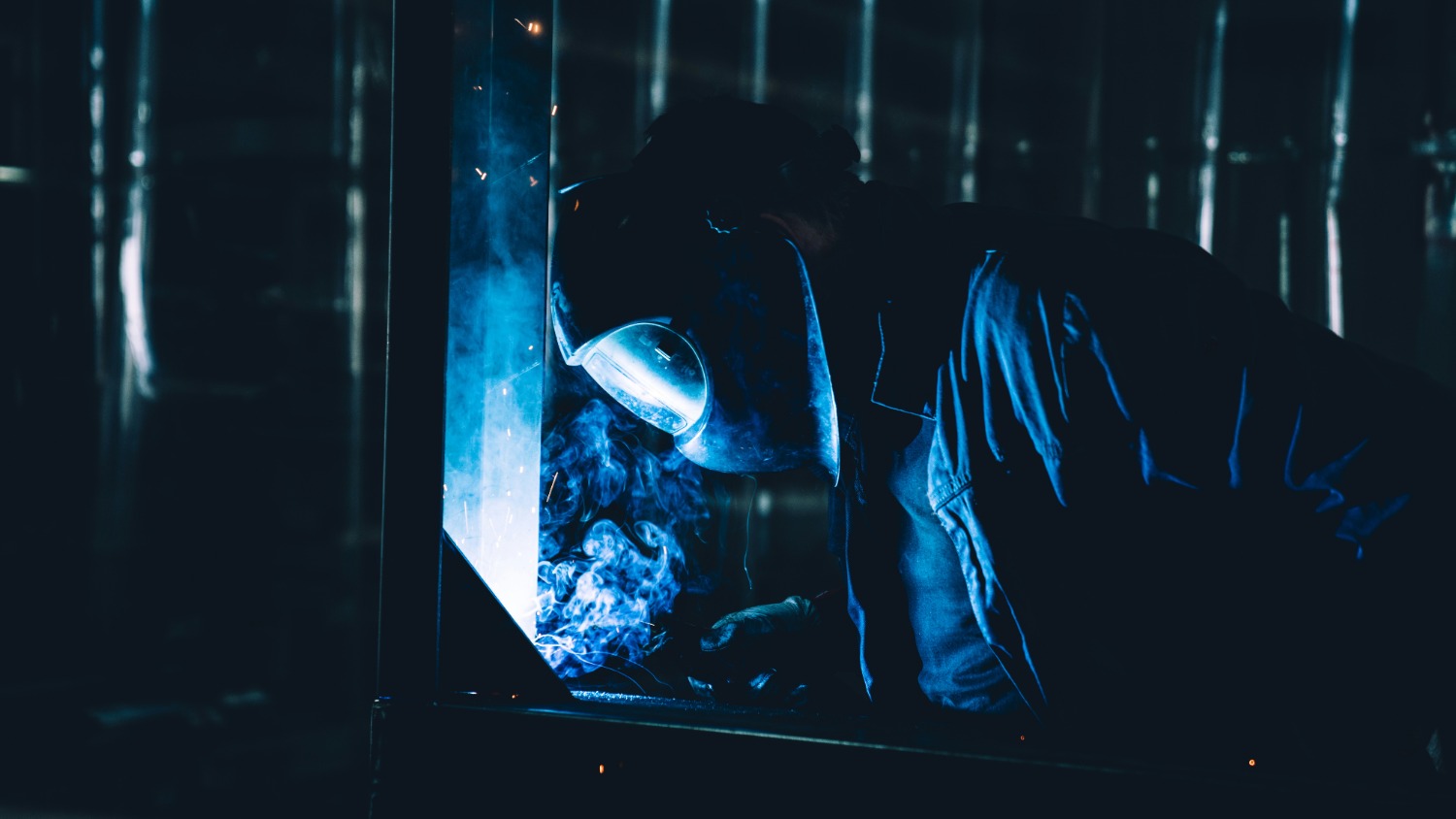
Welding fume is a complex mixture of metal oxides, gases and ultrafine particles that forms during the melting and evaporation of materials in the welding process. The composition of welding fume depends on the welding method, the base material and the filler materials used.
When welding unalloyed and low-alloy structural steel, iron oxides (FeO, Fe₂O₃, Fe₃O₄) are the main components. When welding alloy steels, substances such as manganese, chromium and nickel are also present — substances that are significantly more hazardous to workers’ health than pure iron oxides.
The particles in welding fume are divided into two fractions: inhalable dust (E-fraction) covers all particles up to approximately 10 micrometres that are breathed in through the mouth and nose. Respirable dust (A-fraction) describes the particularly small particles that penetrate deep into the alveoli, where they cause damage.
Welding fume exposure limits in the EU and UK
In the EU, occupational exposure limits (OELs) for welding fume are primarily governed at national level, guided by the Chemical Agents Directive (98/24/EC) and the Carcinogens and Mutagens Directive (2004/37/EC). In the UK, the EH40 Workplace Exposure Limits document sets legally binding Workplace Exposure Limits (WELs) under COSHH Regulations 2002.
Key dust exposure limits at a glance:
In 2019, the UK Health and Safety Executive (HSE) tightened controls on welding fume, requiring all employers to provide adequate engineering controls — such as local exhaust ventilation (LEV) — for all welding operations. This followed the IARC reclassification of welding fume as a Group 1 carcinogen. For manganese, the limit of 0.02 mg/m³ in the respirable fraction is extremely challenging to achieve without effective source extraction.
Where welding fume concentrations exceed 3 mg/m³, occupational health surveillance of welders and nearby colleagues is required. Compliance must be verified and documented through regular workplace air monitoring.
Welding fume limits in international comparison
Welding fume limits are set at national level across the world. Within Europe, there is currently no unified regulatory framework for dust limits in welding operations.
International welding fume limits compared:
The Netherlands and Germany have the most stringent welding fume limits globally. In most industrialised countries, the respirable dust limit stands at 5 mg/m³ - five times higher than in the Netherlands and four times higher than in Germany.
The US Occupational Safety and Health Administration (OSHA) sets the welding fume limit at 5 mg/m³ for an eight-hour working day. The UK’s HSE has significantly strengthened enforcement of welding fume controls in recent years, making LEV a legal requirement rather than a recommended measure.
Health risks from exceeding welding fume limits
The World Health Organization (WHO) classifies welding fume as a Group 1 carcinogen. Exposure above the applicable limits significantly increases the risk of serious illness.
In the short term, inhaling welding fume causes irritation of the airways and eyes, as well as symptoms such as headaches and dizziness. Long-term exposure to welding fume emissions can lead to chronic bronchitis, lung cancer and cardiovascular disease.
Chromium(VI) and nickel compounds in welding fume are particularly hazardous and classified as carcinogenic. Manganese in welding fume can cause neurological damage leading to Parkinson-like symptoms — a health risk that many workplaces underestimate.
Measures to comply with welding fume exposure limits
Under the UK COSHH Regulations 2002 and the EU Chemical Agents Directive, employers must follow a clear hierarchy of controls for welding operations: eliminate exposure where possible, then capture fume at source, and only resort to dilution ventilation as a last resort.
Effective extraction systems directly at the source are the most important technical measure against welding fume. Modern point extraction with integrated torches captures welding fume where it forms - before particles reach the breathing zone of welders. Monitoring air quality in the workplace ensures that limits are consistently maintained.
In addition to extraction technology, the use of personal protective equipment (PPE) and regular training for welders and colleagues on the risks of welding fume are recommended. The EN ISO 21904 series of standards defines the requirements for extraction and filtration equipment for welding operations.
Clean air when welding: how Kiekens supports your business
We breathe approximately twenty thousand times per day. The air can only be better when it’s clean - especially at the welding workplace. At Kiekens, we offer tailored solutions for industrial dust extraction, specifically developed for companies that carry out welding operations.
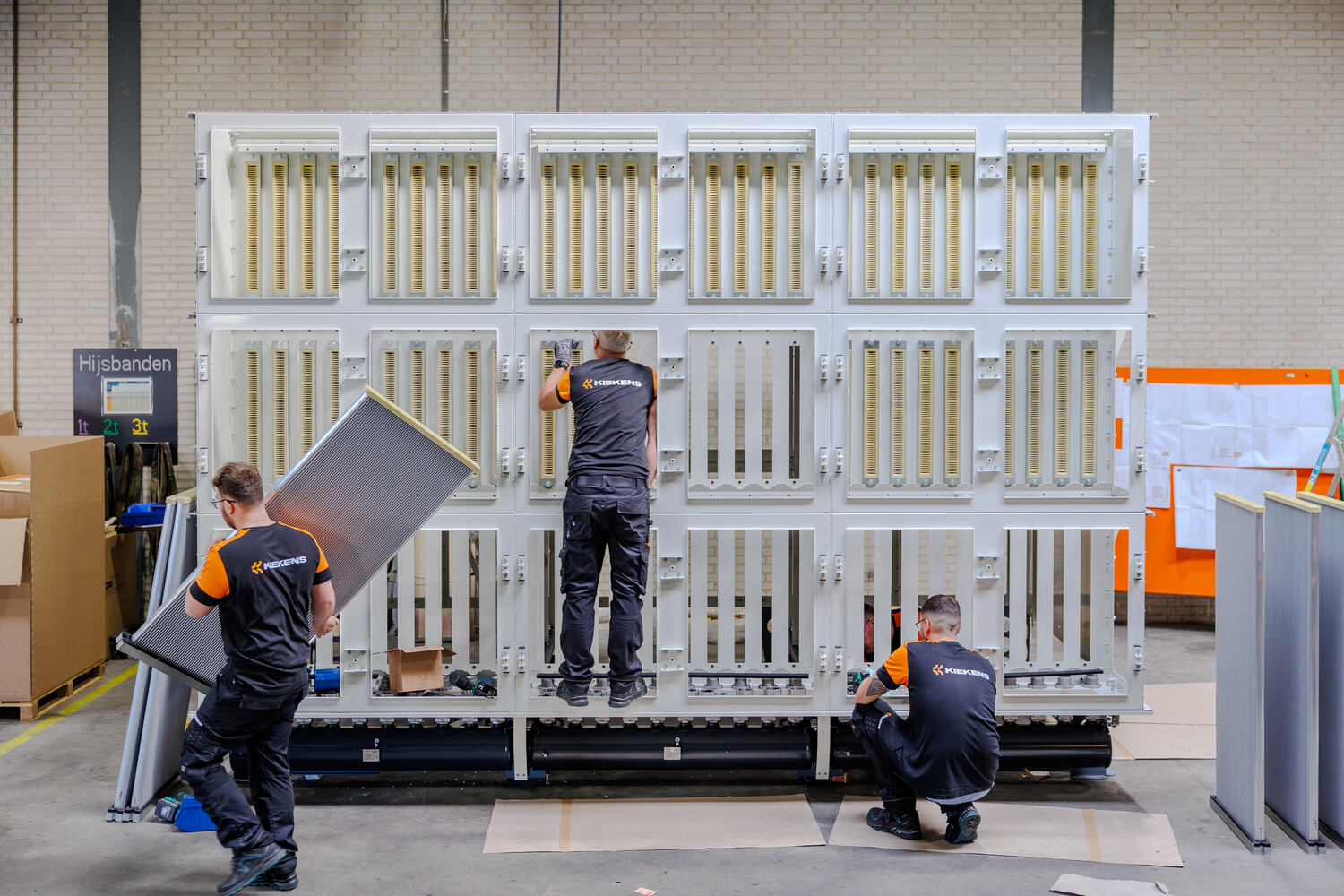
With more than 100 years of experience and turnkey dust extraction systems covering planning, installation and maintenance, we ensure that your business safely complies with welding fume exposure limits. Our extraction systems capture welding fume directly at the source and reliably filter even the finest particles from the air.
Get in contact with our specialists and find out which extraction solution best suits your requirements.
In the UK, the general respirable dust Workplace Exposure Limit (WEL) under COSHH Regulations 2002 is 4 mg/m³. For specific hazardous substances such as manganese, significantly lower limits apply — 0.02 mg/m³ in the respirable fraction. The Netherlands has one of the strictest limits globally at 1 mg/m³.
Where welding fume concentrations exceed 3 mg/m³, occupational health surveillance is required for welders and nearby colleagues. Employers must take immediate action to reduce exposure — for example by implementing effective extraction systems or switching to lower-emission welding processes.
The most effective measure for complying with welding fume limits is source extraction — capturing fume where it forms before it reaches the breathing zone. Kiekens offers turnkey dust extraction systems designed for this purpose. Regular air monitoring and filter performance checks ensure lasting compliance.