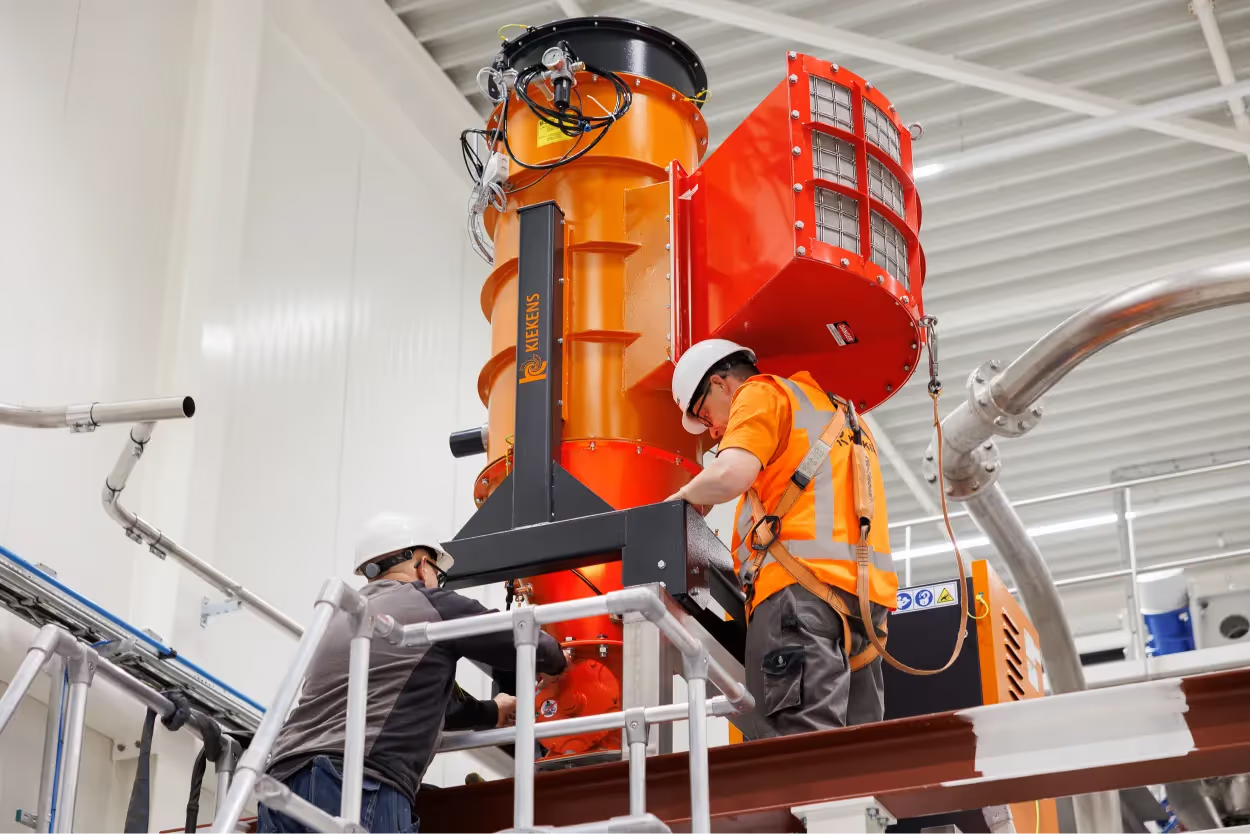
Dust extraction systems for the dairy industry

Professional dust extraction systems are indispensable for safe and hygienic dust control in the dairy industry. When processing dairy products such as milk powder, whey powder and lactose, large quantities of very fine and flammable milk dust are produced. Without targeted extraction, this dust spreads throughout the entire production area, affecting product safety, hygiene and business continuity.
Kiekens industrial dust extraction systems capture this milk dust directly at the source and filter it from the air, keeping the production process clean, controlled and safe.
Why dust extraction is essential in the dairy industry
In dairy factories, milk and powdered dairy products are processed through operations such as spray drying, silo filling, pneumatic conveying and packaging lines. Milk dust can be released at every stage of these processes.
While this may seem harmless at first glance, it presents a well-known risk in process safety. Fine organic dust such as milk powder can explode when mixed with air in the presence of an ignition source. According to EU ATEX Directive 2014/34/EU and HSE guidance, a dust layer of just 0.1 millimetres is sufficient to form an explosive dust-air mixture – a risk that is firmly recognised in the food industry.
Hygiene is equally important alongside safety. Dust deposits on machinery or products can lead to contamination and increase the risk of quality loss or cross-contamination. In a sector where food safety is strictly regulated, this is unacceptable.
Effective dust extraction prevents milk dust from spreading and ensures it is captured directly at the source – protecting both worker health and end product quality.
Where does milk dust occur in the process?
Milk dust is released at various points within production, particularly at spray dryers, silos, pneumatic transport systems and packaging stations. At each of these stages, powder is moved, dosed or filled, allowing fine particles to escape into the airflow.
Without controlled extraction, this dust spreads throughout the space and can settle on equipment and products, affecting both hygiene and process stability.
Dust extraction in practice
In a well-designed system, milk dust is captured directly at the source and separated from the airflow. At spray dryers this occurs in the exhaust air stream, at filling stations directly during the filling process, and at transport lines in the separation process between product and conveying air.
This approach keeps the concentration of airborne dust low and prevents build-up in the production environment.
Learn more about our dust extraction solutions in the food industry on our food industry page.
Mobile and stationary extraction systems
The choice of system depends on the scale and nature of the process.
Mobile extraction systems are used at flexible workstations such as filling points or maintenance zones. They are compact and can be moved directly to the source of dust development.
Stationary extraction systems are used in larger production environments where multiple dust sources are continuously active. Central systems connect various installations and provide constant filtration of large air volumes.
Filtration technology for dairy applications
The dairy industry sets high standards for filtration and hygiene. Depending on the process, cyclone technology, cartridge filters and bag filters are used to effectively separate both coarse and very fine milk particles.
In areas with explosion risk, ATEX-certified extraction systems are applied.
Benefits of effective dust extraction
- Protection of workers from exposure to fine milk dust
- Maintenance of product quality and hygienic production conditions
- Reduced contamination and maintenance requirements on machinery and equipment
- Stable and controlled production process free from unwanted emissions
Customised extraction systems for your dairy process
Every dairy factory has a different production process, with its own dust flows, volumes and safety zones. Kiekens systems are therefore always tailored to the specific situation of each facility.
During this process, we analyse the type of milk dust, airflows, ATEX zoning and hygiene requirements – to ensure cleanability and food safety. Components in the dairy industry are often manufactured in stainless steel.
Food safety standards such as IFS Food and FSSC 22000, together with EHEDG guidelines, play an important role in material selection and hygienic system design within the food industry.
Every dairy environment calls for a different approach. We therefore do not recommend a standard installation immediately, but first analyse together which dust extraction solution best suits your process, safety requirements and production environment.
When processing dairy products such as milk powder, whey powder and lactose, fine, flammable milk dust is released. This dust spreads quickly through the production space and can settle on machines and products. Without targeted dust extraction, risks arise in terms of safety, hygiene and product quality. A professional extraction system captures the dust directly at the source, keeping the workspace clean and controlled.
Yes, under certain circumstances. Fine organic dust such as milk powder can explode when mixed with air in the presence of an ignition source. According to EU ATEX Directive 2014/34/EU and HSE guidance, a dust layer of just 0.1 millimetres is sufficient to form an explosive dust-air mixture. Prolonged exposure to fine dust is also harmful to workers' airways. ATEX-certified equipment is therefore required in at-risk zones.
Dust extraction is applied at all points where milk dust is released: at spray dryers, silos and silo stations, pneumatic transport lines, filling stations for bags and big bags, and dosing points for lactose, whey powder or milk powder. At all these points, dust is captured directly at the source before it disperses into the air.
Several standards are relevant for the dairy industry. The ATEX Directive 2014/34/EU requires employers in environments with explosive dust to take preventive measures. Food safety standards such as IFS Food and FSSC 22000, alongside EHEDG guidelines for hygienic design, also play an important role. Kiekens supplies installations that comply with all these requirements and supports clients with the necessary documentation.

%20(1).jpg)