Dust extraction for animal feed dust
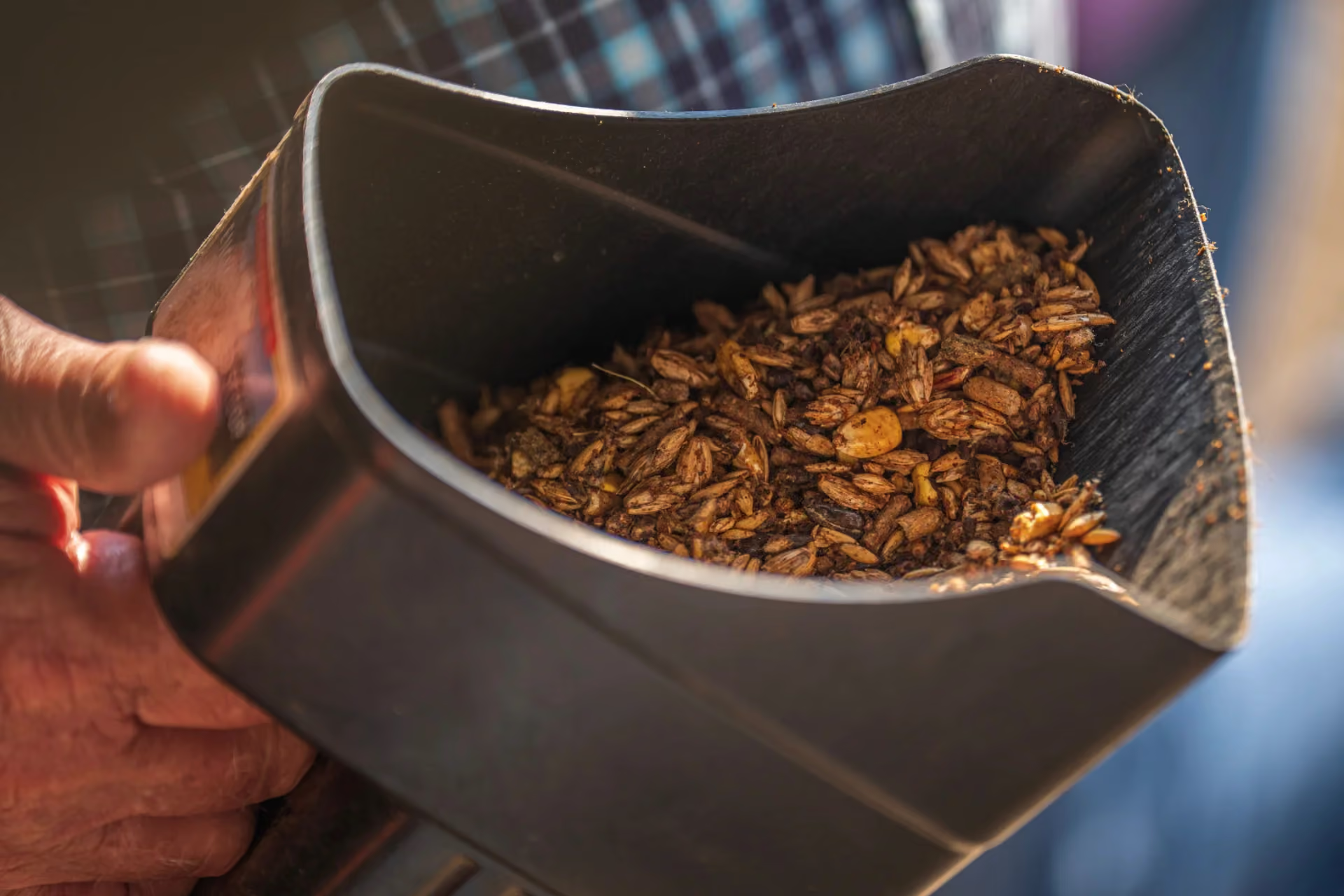
What is animal feed dust?
Animal feed dust is generated at almost every stage of compound feed production: when unloading and dosing raw materials, grinding grains and oilseed meals, mixing premixes, pressing into pellets, and cooling, sieving and loading the final product. The dust is a mix of plant particles, protein residues, minerals and - in many formulations - fat or oil-based components. These last components often make the dust greasier and stickier than, for example, grain or flour dust, which calls for a different approach to filter selection and cleaning.
Health risks of animal feed dust
Allergic respiratory complaints
Proteins in soy, rapeseed and grain components can trigger allergic reactions in sensitive workers: coughing, wheezing and chest tightness. With prolonged exposure, this can develop into chronic occupational asthma.
Organic Dust Toxic Syndrome (ODTS)
Short but intense exposure - for example when unloading raw materials or cleaning silos - can cause flu-like symptoms: fever, muscle aches and general malaise. ODTS is not allergic in nature and can also affect workers with no known sensitivity.
Mould spores and endotoxins
Damp or improperly stored raw materials can contain mould spores and endotoxins. Long-term exposure increases the risk of chronic respiratory complaints and, in rare cases, hypersensitivity pneumonitis.
Explosion hazard: animal feed dust and ATEX
Like grain and flour dust, animal feed dust is an organic dust that becomes explosive at the right concentration in an enclosed space. The risk occurs at several points: at elevators and transport pipework, in silos, and at the pellet press, where frictional heat adds an extra ignition source.
Under the EU ATEX framework (Directives 1999/92/EC and 2014/34/EU), companies producing animal feed are required to carry out a risk assessment and take measures accordingly. This typically includes:
- Installing ATEX-certified extraction and filtration systems
- Zoning hazardous areas (zone 20, 21 or 22)
- Drawing up and maintaining an explosion protection document
- Spark detection and extinguishing on equipment with elevated friction risk, such as the pellet press and cooler
Sectors where animal feed dust plays a role
- Compound feed manufacturers and feed producers
- Premix producers
- Pet food manufacturers
- Fish feed production
- Grain processors with their own feed line
Effective dust extraction for animal feed dust
Effective dust extraction for animal feed dust takes into account the fat and protein content of the raw materials, the explosion risk during pressing and transport, and the scale of the production site. Our engineers determine the right extraction capacity, filter type and explosion safety measures for each situation, always in line with EU occupational safety and ATEX requirements. Because our systems are built modularly, the installation grows with you as your production expands or your raw material mix changes.
Kiekens: your specialist in animal feed dust extraction
With more than 100 years of experience in industrial dust extraction, Kiekens understands the challenges of the compound feed industry inside and out. We advise on a tailored basis: from a single extraction hood at a discharge point to a fully integrated system for a large feed mill. With the Clean Air Plan, we keep the installation in top condition all year round.
Want to know how to structurally address animal feed dust exposure in your business? Contact one of our specialists for a no-obligation consultation.
Yes. In addition to occupational safety regulations, feed safety standards such as GMP+ FSA apply throughout the feed chain. These set requirements for material choice, cleanability, and preventing contamination risks between production lines. Kiekens has experience with installations that meet both occupational safety requirements and these feed safety standards.
That depends on the fat and protein content of the raw materials. For sticky dust, such as around pellet presses and coolers, filter plates offer the best operational reliability thanks to their open structure and powerful cleaning. For stable processes with a lower dust load, such as premix dosing, filter bags are a cost-effective alternative.
Cyclones are widely used as pre-separators ahead of the main filter for transporting and pre-separating raw materials. Combined with a turbo fan - available in an ATEX version where required - this creates an efficient pneumatic transport system for raw materials and pellets.
That depends on the current installation and the specific requirements of the production process. In some cases, expansion or adaptation is possible, for example with additional extraction points or a filter better suited to fat- or oil-containing dust. If the existing installation is not ATEX-certified and the process requires it, replacement or a thorough adaptation is necessary. Kiekens always assesses the current situation first before giving advice.
Maintenance frequency depends on production intensity and the type of raw materials. As a general guideline: filters should be checked and cleaned at least quarterly, with annual preventive maintenance for the full installation. For fat- or oil-containing dust, which builds up faster, more frequent maintenance is advisable. With the Kiekens Clean Air Plan, we take this maintenance off your hands.