Ex zones: classification, ATEX requirements and safety measures in industry


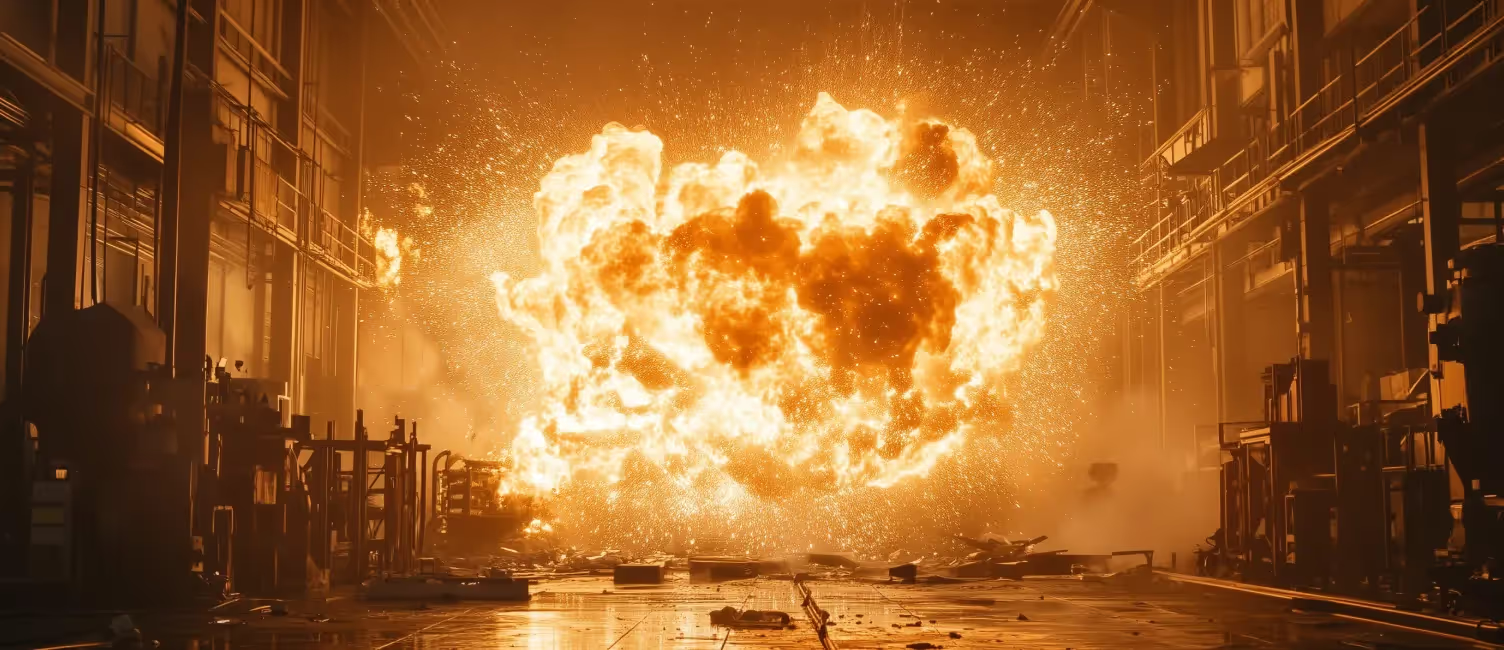
If you work with combustible dust, gases or flammable substances, ex zones are part of your daily reality. These areas — where an explosive atmosphere can form — demand a specific approach: the right equipment, the right measures and above all, the right classification. Because the zone determines everything.
The European ATEX directives define six zones. Which zone applies to your facility determines what installations are permitted, what you are legally required to document and how you protect your people. Good dust extraction plays a bigger role in that picture than many companies realise.
Below we explain how zone classification works, what the regulations require and how the right extraction technology directly strengthens your safety strategy.
Which areas are considered potentially explosive?
More of them than you might expect. Chemical production, refineries and spray painting facilities are obvious examples. But food processing, pharmaceuticals and metalworking also generate explosion risks every day — and it often starts with something as ordinary as fine dust.
Wood dust, aluminium particles, flour, plastic granulate: once these substances reach sufficient concentration in the air and encounter an ignition source, the conditions for an explosion are in place. The risk does not come from the material itself, but from the likelihood that its airborne concentration reaches a critical threshold.
That is exactly what ATEX zone classification maps out. How often can an explosive atmosphere occur? For how long? Based on those questions, a zone is assigned — and that zone then determines everything from permitted equipment to the extraction system required.
The six ATEX zones at a glance
The six zones are divided into two groups: three for gases, vapours and mists (zones 0, 1 and 2) and three for combustible dust (zones 20, 21 and 22). Classification runs from continuously present hazard to occasional risk.
Gas ex zones
Zone 0 is the most demanding gas zone: an explosive atmosphere of combustible gases or vapours is present almost continuously. In practice, this applies mainly to the interior of equipment such as reaction vessels or closed tanks. Zone 1 covers areas where a hazardous explosive atmosphere may occasionally form during normal operations, for example during filling or sampling. Zone 2 covers locations where that risk is not normally present and, when it does occur, lasts only briefly.
Dust ex zones
Zone 20 is the equivalent for combustible dust: inside dust filters, silos or mills, an explosive dust cloud is present almost continuously. Zone 21 sees that risk only occasionally during normal operations. In zone 22, dust clouds do not normally form and, when they do, they dissipate quickly.
A useful rule of thumb: "frequently" means more than 50 percent of operating time, "occasionally" means 1 to 10 percent. When in doubt, assign the higher zone.
Regulatory framework: ATEX directives and national legislation
The legal foundation consists of two European ATEX directives. The operating directive 1999/92/EC — also known as ATEX 137 -- is addressed to operators. It requires you to carry out a risk assessment, classify potentially explosive areas and draw up an explosion protection document. The product directive 2014/34/EU sets out which equipment and protective systems may be used in potentially explosive areas.
All EU member states are required to transpose the ATEX directives into national law, and obligations for operators are consistent across the EU: carry out a documented risk assessment, maintain an up-to-date explosion protection document and ensure that staff working in potentially explosive areas receive regular training.
Compliance is not a formality. It is the foundation of a safe operation.
Risk assessment and explosion protection document
The risk assessment is where it all starts. You systematically identify where explosive atmospheres can occur in your facility, how often and for how long. Based on that analysis, zones are assigned and measures determined.
Those findings go into the explosion protection document: which zones exist, which measures apply and which equipment is approved for each area. This is not a one-off exercise. Every change to processes, materials or installations requires an update.
For industries working with combustible dust, safety-relevant parameters such as the KSt value play a direct role in determining the correct zone and selecting appropriate protective systems.
Marking and equipment categories in ex zones
Potentially explosive areas must be clearly marked with the yellow "Ex" sign. That marking also belongs in your site's emergency and evacuation plans. But marking alone is not enough: ATEX directives require all equipment in ex zones to meet the correct category.
The logic is straightforward: category 1 equipment — the highest specification — is approved for zones 0 and 20. Category 2 applies to zones 1 and 21, category 3 to zones 2 and 22. Every ATEX-certified product must also meet requirements for temperature classes and types of ignition protection.
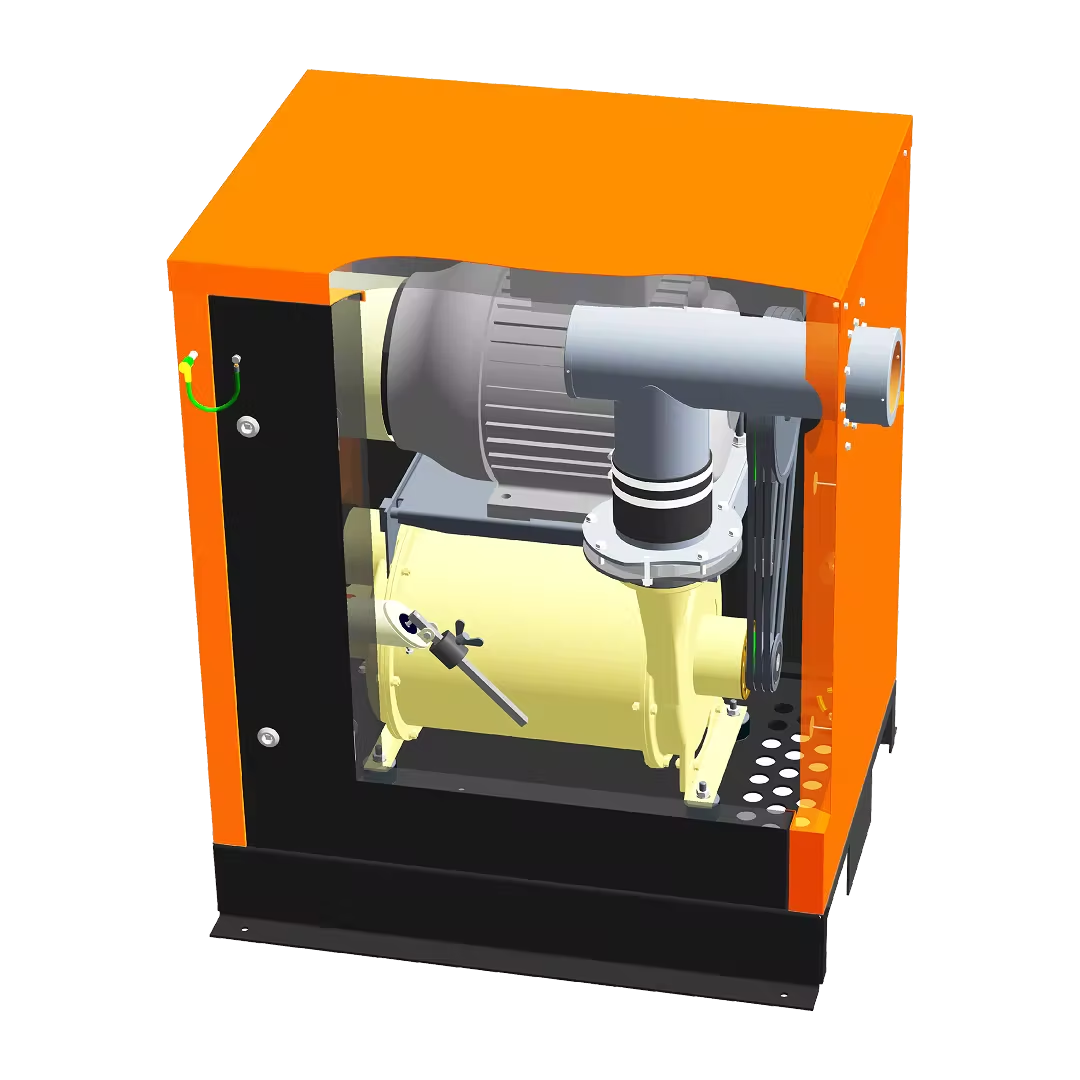
This includes extraction systems and fans. In potentially explosive areas, these must fully comply with EN 14986. No exceptions.
Why dust extraction directly influences your zone classification
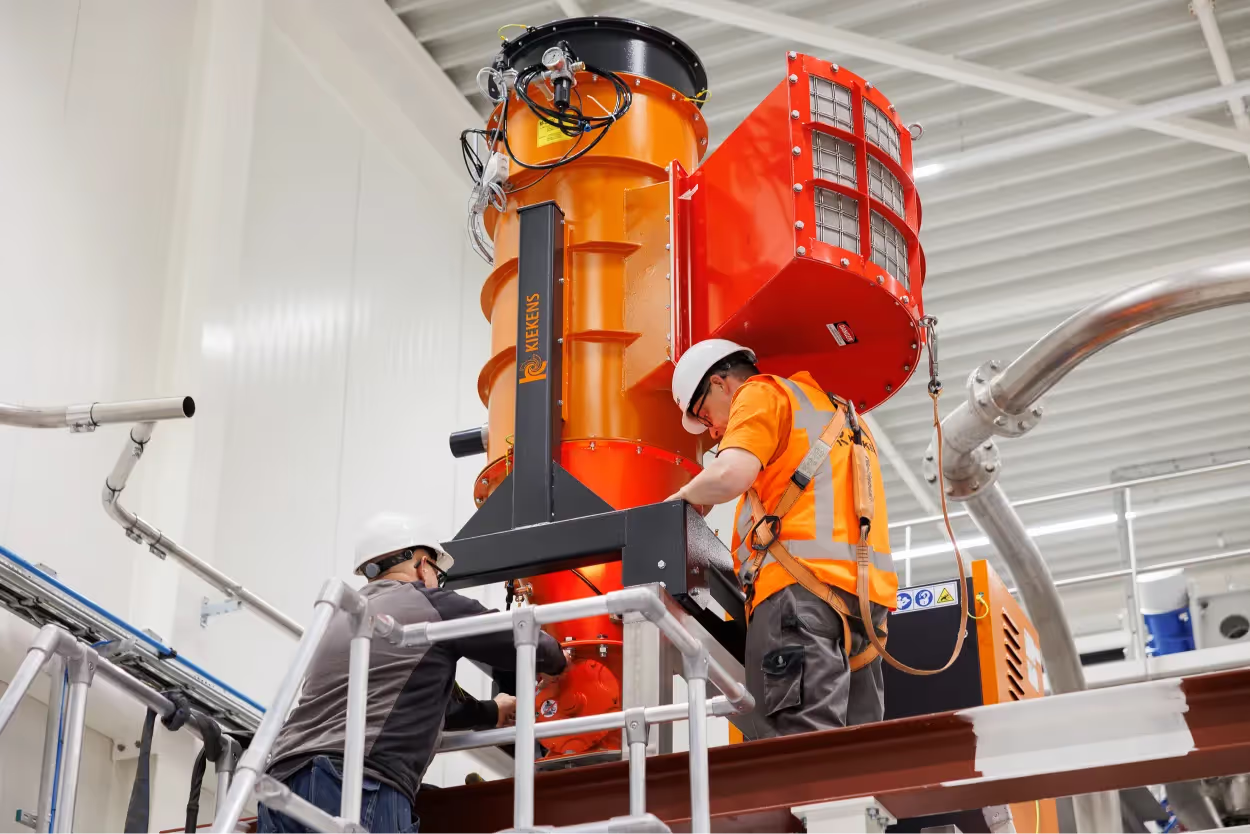
This is where it gets practically relevant. The most effective way to prevent an explosion is to prevent an explosive atmosphere from forming in the first place. That is exactly what a professional ATEX extraction system does: capturing combustible dust directly at the source before it can disperse into the air.
The impact goes beyond safety. Areas classified as zone 21 without extraction can often be downgraded to zone 22 through effective dust capture. That means lower equipment requirements — and lower capital investment. Good extraction pays for itself.
The condition is that the installation itself must be fully ATEX-compliant throughout: from antistatic hoses and conductive containers and spark-proof motors to pressure-resistant filter units such as the Dustmaster 9.000 and turbine fans in accordance with EN 14986. Supplementary systems such as burst discs, flame arrestors and non-return valves complete the picture. Regular maintenance and inspection keep everything running reliably.
For companies in food production, metalworking, plastics or mining, a well-designed combination of extraction, zone classification and protective technology is the most effective — and most cost-efficient — way to meet your regulatory obligations and keep your people safe.
A safer working environment with Kiekens
At Kiekens, we are involved from start to finish. From risk analysis and zone classification through to design, installation and maintenance of your extraction system — you work with a dedicated specialist, not an anonymous service team.
With more than 115 years of experience in industrial dust extraction, we know what works. We do not offer standard solutions. We build systems tailored precisely to your ATEX zone and production process. All components are manufactured in the Netherlands. All expertise is in-house.
Protect your people and your production. Get in touch for a tailored solution.
The ATEX guidelines distinguish six ex-zones: zone 0, 1 and 2 for gases, vapors and mists, and zones 20, 21 and 22 for flammable particulate matter. The classification is based on how often and for how long an explosive atmosphere can occur.
That's the operator. As part of the legally required risk assessment, you identify, classify, and document potentially explosive areas in the explosion protection document.
Only ATEX-certified equipment assigned to the correct category. The choice depends on the specific zone and the applicable requirements for ignition protection type and temperature class.
Yes. A professional dust extraction system can reduce dust concentration sufficiently to justify a lower zone classification. The system itself must fully comply with the ATEX requirements of the relevant zone. Kiekens supports you with documentation, zone classification and the required audits.