Cotton dust: fly that lodges itself in your system
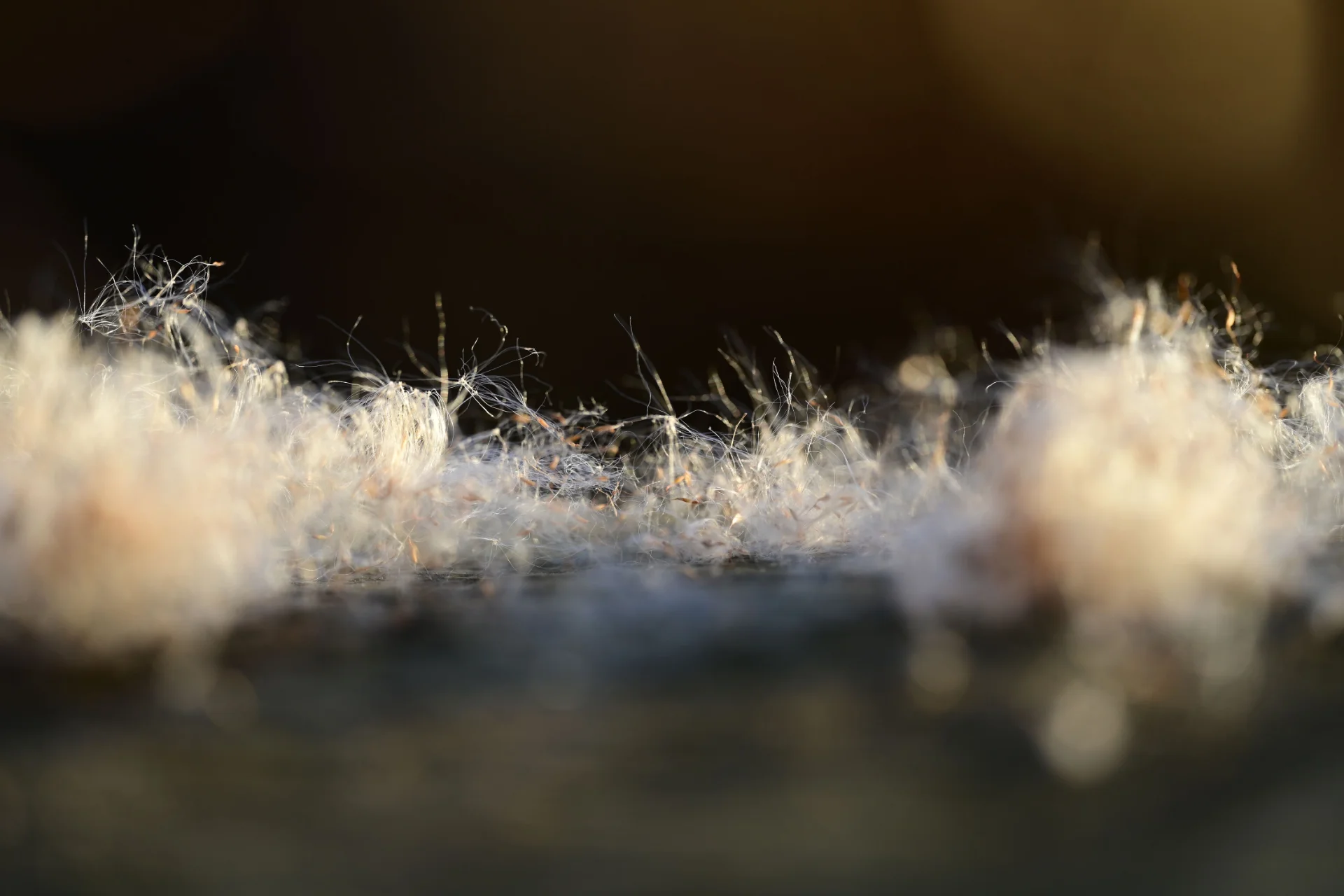
What is cotton dust?
Cotton dust arises across the whole chain from bale to fabric: opening and cleaning the bales, carding - where the fibres are combed out into an even web - spinning into yarn, weaving or knitting, and finishing steps such as raising, sanding and dyeing.
The composition shifts along the way. At the start of the line, during opening and cleaning, mostly coarse material is released: leaf and bract residue, seed coat fragments, sand and occasionally metal particles that came in with the harvest. Further along it becomes finer and lighter. Carding and spinning produce fibre fly, which stays airborne for a long time and spreads throughout the mill.
What sets cotton dust apart from a powdered dust is the shape of the particles. They are short, light fibres rather than grains. They behave differently in the air, in your ductwork and on your filter medium. On top of that, raw cotton carries bacteria and fungal residue from the field, which release endotoxins during processing.
What makes cotton dust difficult
Three properties determine what an installation has to look like.
- It is fibrous. Fly tangles around fan blades, lodges in bends and in places with low air velocity, and loads filter medium differently from powder. That calls for pre-separation - a fly catcher or cyclone ahead of the fine filter - and ductwork with generous bends and sufficient transport velocity.
- It contains foreign material. Raw cotton comes from the field. Sand, plant residue and occasional metal particles arrive inside the bale. That calls for coarse pre-separation and, where relevant, spark detection before the material reaches the fine filtration.
- It carries a biological load. The bacteria and fungal residue on the raw fibre release endotoxins. That sets requirements for protecting your staff during maintenance and cleaning of filters and ductwork, and for hygiene around the collected material.
Health risks of cotton dust
- Byssinosis, commonly known as Monday fever. Cotton dust is its best-known cause. Workers experience chest tightness and shortness of breath at the start of the working week, after a period without exposure. The symptoms ease somewhat as the week goes on. With repeated exposure that pattern develops into chronic bronchitis and permanent loss of lung function. The endotoxins from the raw fibre play the leading role.
- Flu-like symptoms after a short, heavy exposure. Opening bales or cleaning a carding machine can trigger fever, muscle aches and headache, often hours later. This is known as ODTS and it is not allergic in nature: it affects workers who have never had problems before.
- Gradual loss of lung function. Even without acute symptoms, long-term exposure causes a slow decline in lung function, comparable to COPD. The risk is highest in the opening line, the carding room and the spinning mill, where concentrations are typically at their peak.
What extraction achieves here
The same applies to all three: respiratory protection only works while it is worn and correctly fitted. Capture at source works for everyone in the space, including the colleague who is only passing through. That is also the order of control European legislation requires.
Beyond that, a properly functioning installation means fewer blockages, less long-term absence, and machines that last longer because fly is not reaching the bearings.
Fire and explosion risk
Cotton dust and fly are combustible. Fine fibre dust forms an explosive mixture at sufficient concentration; cotton dust generally falls into dust explosion class St 1. The risk is concentrated in the opening line, at the carding machines, in transport ducting and filters, and anywhere fly accumulates.
Two things are specific to cotton here.
- The metal particles from the bale are the classic ignition source. A tool fragment or a piece of baling wire passing through an opener or beater can produce a spark through mechanical friction, igniting the fly in the machine or the duct beyond it.
- And fly accumulates where nobody looks: above suspended ceilings, on ducting, on light fittings, around bearings and motors. A small primary explosion lifts that layer and causes the secondary explosion that does the real damage. A fixed cleaning regime is therefore not a matter of tidiness but a safety measure.
The ATEX directives 2014/34/EU and 1999/92/EC apply to controlling this risk, including zone classification and an explosion protection document.
Legislation and standards
The EU Chemical Agents Directive requires employers to assess exposure and reduce it as far as possible, following a fixed order of control: eliminate first, then engineering controls at source, then organisational measures, with respiratory protection last.
There is no harmonised European exposure limit for cotton dust. Each member state sets and periodically revises its own values, so check what applies where you operate. The exposure assessment follows EN 689, with measurements taken in the breathing zone.
For the explosion risk, measures are recorded in a risk assessment and explosion protection document as required under national implementation of the ATEX directives.
Sectors where cotton dust plays a role
- Spinning mills and yarn producers
- Weaving and knitting
- Textile finishing: dyeing, bleaching and raising
- Nonwoven production
- Technical textiles
- Mattress and filling material manufacturing
- Textile recycling
- Wadding and insulation material production
How do you extract cotton dust effectively?
An installation for cotton dust accounts for three things at once: the fibre structure, the explosion risk and the foreign material in the raw stock.
- Source capture at the opening line, carding machines, spinning frames, looms and raising machines
- Fly catchers or pre-separators that collect the fibres ahead of the fine filter
- Ductwork designed against fibre build-up: generous bends and sufficient transport velocity
- Spark detection and suppression directly after the opener and at the carding machines
- Filter medium and cleaning regime matched to fibrous dust rather than powder caking
- ATEX construction appropriate to the classified zone
- A cleaning schedule for ducting, light fittings and structural elements
Collected fly is also not necessarily waste. Where quality requirements allow, it can be reused in lower yarn counts or as filling material. That saves disposal costs and turns a residual stream into a raw material.
Our engineers determine the right capacity, filter type and explosion protection measures per situation.
Kiekens: your specialist in cotton dust extraction
With more than 100 years of experience in industrial dust extraction we know the demands of textile processing from practice. From a single extraction hood at a carding machine to an integrated system for a complete spinning mill. We start by looking: where the fly accumulates, where the spark risk sits, where the operator stands. Then we design, build and maintain — from a single source. The Clean Air Plan keeps the installation performing year-round.
Want to know how much cotton dust your production generates? Request a free baseline measurement from one of our specialists.
Cotton fibers behave differently than dust: they tangle around fan blades and get stuck in bends and areas with low airflow. A lint trap before the fine filter, wide-radius bends, and sufficient transport velocity prevent this. If your system is already clogging up regularly, the transport velocity is usually the first thing you should have recalculated.
Byssinosis is a lung condition caused by repeated exposure to cotton dust and the endotoxins it contains. It begins with chest tightness at the start of the workweek and can lead to permanent loss of lung function. Capturing dust at the source - opening departments, carding machines, spinning machines - is the most effective measure.
Coarse pre-separation removes the bulk of the material before it enters the machine. Following this, spark detection and extinguishing systems catch whatever gets through immediately after the opener or beater, preventing the lint from igniting in the ducting or filter.
Two things. Do not dry-sweep or blow clean: that stirs up the very fine particles you were trying to capture. Also, be mindful of endotoxins - opening filters and piping releases a concentrated biological load, so respiratory protection is essential during maintenance.
Often, yes. Our engineers assess the capacity, ducting routes, and filtration, making adjustments where necessary - such as adding a lint trap or modifying the ductwork for fiber transport. A complete replacement is rarely required.